
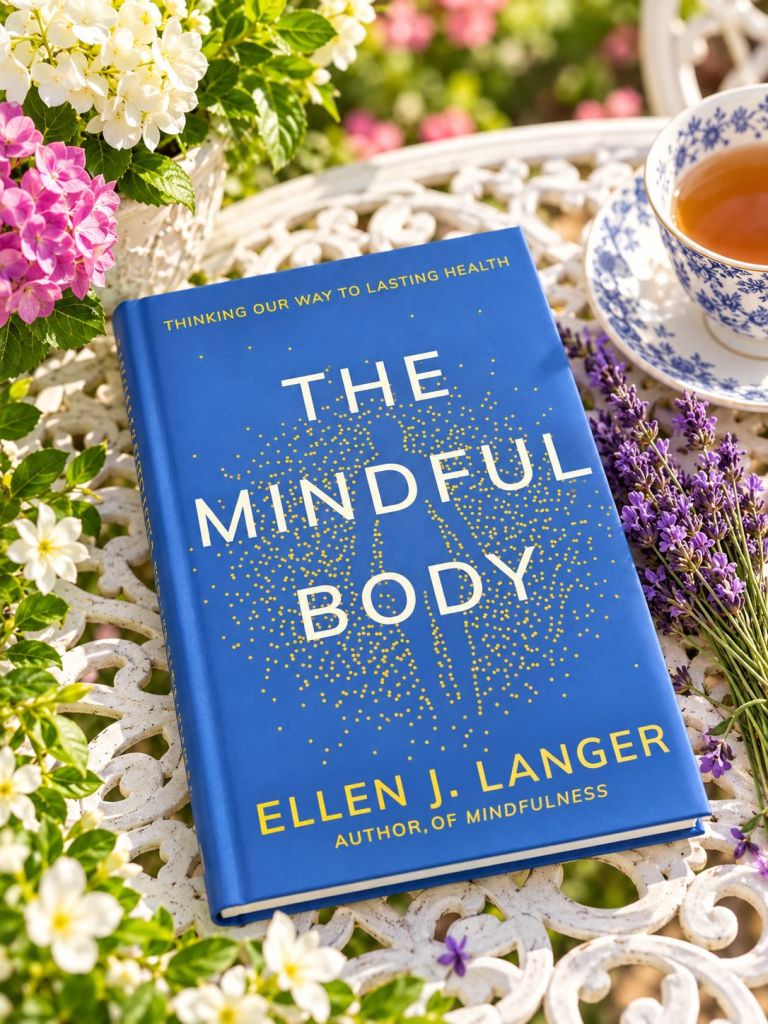
Some books teach you something new. Others put into words what you have been questioning for years. For me, The Mindful Body brought clarity to thoughts and experiences I had carried with me for a long time.
I can say without hesitation that this is one of the best books I have ever read.
Ellen J. Langer challenges much of what we have come to accept about health, illness, ageing and the influence of our minds on our bodies. Drawing on decades of psychological research, she explores how our beliefs, expectations and perceptions may influence our physical health, often in ways we don’t fully appreciate.
The book is full of studies, experiments and real-life examples. Some surprised me, while others felt immediately familiar. I found myself thinking about situations from my own life, but even more frequently about my ten years working as a nurse in the NHS.
And that is what made this book so powerful for me.
When a Diagnosis Becomes an Identity
I spent years working in oncology, caring for people at some of the most frightening and vulnerable moments of their lives. I have seen what happens when someone receives a cancer diagnosis. The fear, the uncertainty, the sudden change in how they see themselves and their future.
It is interesting how easily we overlook the psychological consequences of the way illness is presented to people.
I have seen patients change almost overnight following a diagnosis. People who were previously independent, active and optimistic could suddenly become frightened of their own bodies. Every symptom took on a new meaning. Their expectations of themselves changed. Sometimes, so did the expectations of everyone around them.
It made me wonder how much of that change came from the illness itself and how much came from what people had been led to believe their diagnosis meant.
This is not about blaming patients for their illness or suggesting that a positive attitude can cure cancer. It is about recognising that the way someone understands their illness can become part of their experience of it.
And as healthcare professionals, we have enormous influence over that understanding.
The Weight of a Healthcare Professional’s Words
One of the things I feel most strongly about is the authority we give to medical opinions.
Patients trust doctors and nurses. They listen to us, remember what we say and often carry our words with them long after an appointment has ended. Sometimes a single conversation can change how someone views their entire future.
A diagnosis is important information. A prognosis is a professional judgement based on the evidence available. Neither should be confused with absolute certainty about an individual human being.
Yet I believe healthcare can sometimes communicate uncertainty as though it were certainty.
I have seen how quickly hope can disappear when someone believes their future has already been decided. I have also seen how differently people respond when they feel involved, informed and still able to make choices about their lives.
There is an enormous difference between being honest with someone about a serious illness and making them feel powerless in the face of it.
We should be able to acknowledge the seriousness of a condition without reducing someone to their diagnosis.
People deserve the truth. But they also deserve to know where the limits of our knowledge lie.
That distinction matters to me enormously.
What Ellen Langer Gets Right
What I love about this book is that Langer asks questions many of us rarely stop to consider.
Why do we accept certain limitations simply because we have reached a particular age?
Why do we assume that a diagnosis defines what our bodies are capable of?
How much do our expectations influence our behaviour, our symptoms and our experience of health?
We are constantly changing. Our bodies are constantly responding to our environment, experiences and circumstances. Yet we often speak about health as though it were fixed, with people placed into categories from which they cannot escape.
Healthy.
Unhealthy.
Young.
Old.
Recovering.
Deteriorating.
Human beings are more complicated than that.
Why I Left Oncology
This is where my response to the book becomes deeply personal.
I no longer work in oncology, and part of that decision came from a growing conflict between some of what I witnessed in healthcare and what I believe patients deserve.
I cared deeply about the people I looked after. I worked alongside dedicated, compassionate professionals, many of whom went far beyond what was expected of them. My concerns are not a criticism of every doctor, nurse or oncology service.
But over time, I found myself questioning aspects of how we approach illness, particularly the influence of medical authority, the language surrounding prognosis and the extent to which patients can begin to see themselves through the limitations we describe.
I struggled with that.
I believe in evidence-based medicine. I believe in treatment, clinical expertise and scientific progress. But I also believe in questioning established practices, especially when they concern something as complex as the human mind and body.
For me, professional integrity means more than following accepted approaches. It means being willing to question them when something doesn’t sit right.
Reading The Mindful Body reminded me why those questions had mattered so much.
A Controversial Book? Perhaps. But Not to Me.
I can understand why some people might find Langer’s arguments controversial.
Our expectations can shape our behaviour, our stress responses, our experience of symptoms and how we engage with treatment. To me, those influences are too important to treat as an afterthought.
I don’t believe that questioning the limitations of medicine makes someone anti-science. I believe it can be part of taking science seriously.
Sometimes those beliefs protect us. Sometimes they hold us back.
My rating: 10/10


Leave a Reply